 Aeronautics
Stress-Induced Fracture in Ground Plate: A Case Study in FEA Oversight
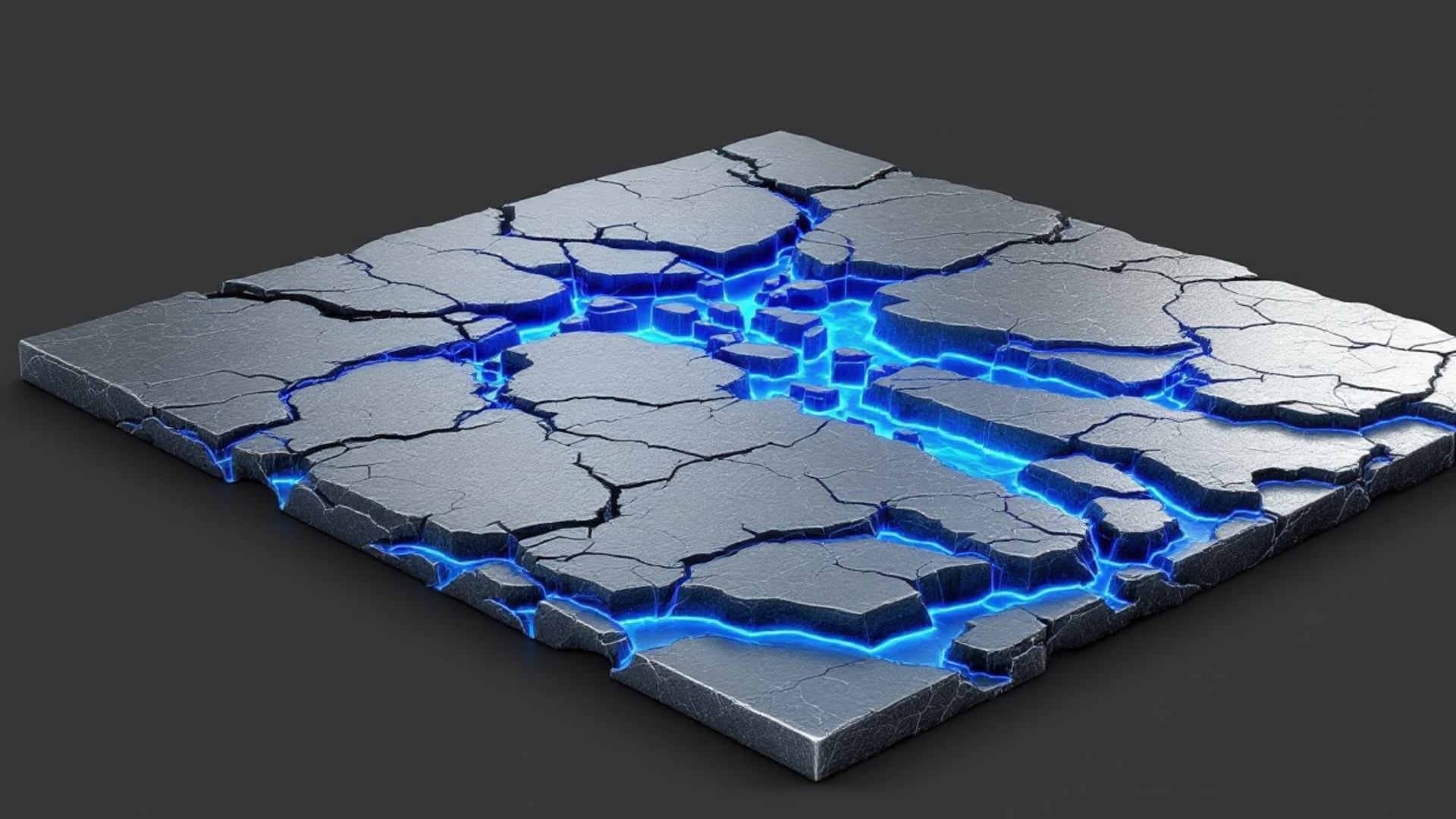
A leading global manufacturer in the compactors segment partnered with ALTEN to address challenge of ensuring structural reliability under demanding field conditions. The client was seeking more than just engineering support—they needed a strategic ally with deep technical expertise, agility, and a proactive mindset to navigate complex mechanical designs.
During ground testing, a critical failure occurred: the machine’s ground plate fractured into two pieces due to elevated stress concentrations along the margin of the curve. The root cause was traced back to an oversight in the design phase, where the plate was cast without a prior Finite Element Analysis (FEA), leading to improper stress distribution.
ALTEN stepped in with a structured, design-led, and cross-functional approach—conducting a thorough failure investigation, implementing corrective design measures, and integrating advanced simulation techniques. This not only resolved the immediate issue but also reinforced collaboration across engineering, procurement, and manufacturing teams, delivering long-term cost savings and enhanced product resilience.

Challenge:
- Field-Tested Reliability Demands: Equipment must perform flawlessly in rugged environments—any failure, like a fractured ground plate, can halt operations and damage brand reputation.
- Limited Design Iteration Time: Fast-paced development cycles leave little room for trial-and-error; simulation-led design validation becomes critical to avoid costly rework.
- Cross-Functional Coordination Gaps: Misalignment between design, procurement, and manufacturing teams can lead to overlooked risks, such as stress concentration zones in structural components.
- Legacy Design Constraints: Older design frameworks may not accommodate modern optimization tools, requiring retrofitting or complete redesigns to meet current performance and cost targets.
- Digital Engineering Adoption Lag: Many manufacturers are still transitioning to digital workflows; ALTEN accelerates this shift with integrated FEA, CAD, and PLM capabilities.
- Failure Mode Blind Spots: Without predictive analysis, hidden vulnerabilities—like curve margin stress spikes—can go undetected until physical testing or field failure.
Solutions to Key Challenges in the Compactors Segment:
Scoping:
- Conducted a detailed FEA-based assessment of the ground plate failure, identifying stress concentration zones.
- Reviewed material and process costs, proposing alternatives that maintained performance while reducing expenses.
Pre-Launch:
- Documented all FEA assumptions, including cantilever modeling, load distribution, and boundary condition limitations.
- Created activity maps for redesign cycles, simulation validation, and material testing.
Delivery:
- Implemented design modifications to redistribute stress away from curve margins and reinforce critical zone.
- Conducted final reviews with stakeholders to confirm alignment on performance, cost targets, and safety standards.
- Enabled faster execution cycles and improved product resilience through simulation-led engineering.
Proactive Design Reviews in the Compactors Project:
- Conducted advanced FEA to reveal hidden stress zones on the ground plate’s curve margin.
- Proposed design changes—geometry tweaks and load path realignment—to prevent fractures.
- Integrated early digital validation to cut prototyping and ensure safety compliance.
Benefits
- ALTEN performed advanced FEA simulations, revealing hidden stress zones on the ground plate curve margin.
- Recommended design changes to balance centrifugal loads—adjusted geometry and load paths to prevent fractures.
- Integrated digital validation early, streamlining workflow and reducing reliance on physical prototypes.
Knowledge Where It Counts
ALTEN applied simulation-led expertise to solve a key reliability and cost issue for a global compactor manufacturer. From failure analysis to redesign, we ensured technical rigor, agile execution, and cross-team collaboration—delivering a robust, optimized ground plate and driving real operational impact.
Insights gained:
- Early simulation helps catch stress issues before physical failure.
- Minor oversights matter: Skipping stress checks led to ground plate fracture.
- Team alignment boosts reliability: Cross-functional collaboration enabled faster fixes and better outcomes.
Lessons Learned:
- Simulate worst-case conditions: Cantilever modeling revealed hidden stress risks despite Creo limitations.
- Document assumptions clearly: Load cases and boundary conditions must be transparent and traceable.
- Go beyond the brief: ALTEN’s proactive reviews uncovered extra stress zones and optimization opportunities.
Best Practices Developed:
- Start with FEA: Run simulations early, especially for load-bearing parts.
- Use agile sprints: Speed up redesign and validation with sprint-based execution.
- Close the loop: Feed field failure data back into design to boost reliability.
Technology and Approach
- Creo Parametric was used for 3D modeling and FEA to assess ground plate stress and integrity.
- PLM systems facilitated documentation, version control, and cross-functional collaboration.
- Simulation-led validation enabled early detection of stress zones using cantilever modeling and centrifugal load simulations.
- PLM integration ensured traceability of design assumptions and reduced rework.
- The project achieved cost efficiency through simulation, PLM collaboration, and data-driven design optimization.