 Aeronautics
Engineering Agility in Aerospace
Navigating Complexity through Digital, Agile and Sustainable Innovation
1. Executive Summary
The aerospace industry is undergoing its most significant transformation in decades. Post-pandemic recovery, sustainability mandates, digital acceleration, and rising customer expectations are redefining how aircraft are engineered, certified, and supported throughout the lifecycle.
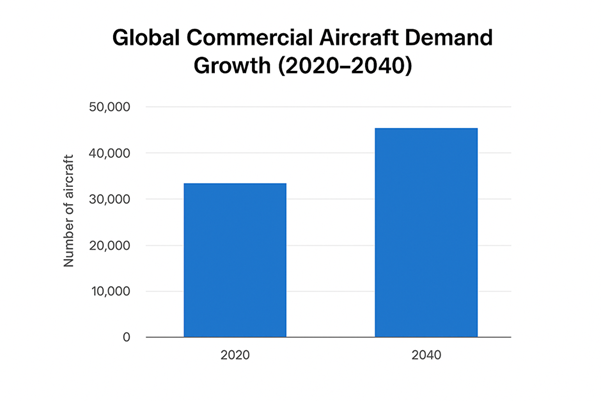
Commercial aircraft demand is expected to grow 3–5% annually through 2040, while the industry races toward net-zero emissions by 2050 (IATA, 2023). At the same time, digital technologies—MBSE, digital twins, predictive analytics, and AI—are enabling faster development cycles and new operating models.
This whitepaper explores how agile engineering, digital technologies, and sustainable design principles are reshaping the future of aerospace.
Drawing from ALTEN India’s contributions across global programs, it outlines practical frameworks for aerospace companies to build innovation-ready, globally integrated engineering ecosystems.
This whitepaper explores how agile engineering, digital technologies, and sustainable design principles are reshaping the future of aerospace. Drawing from ALTEN India’s contributions across global programs, it outlines practical frameworks for aerospace companies to build innovation-ready, globally integrated engineering ecosystems.
2. The Aerospace Industry at an Inflection Point
Aerospace stakeholders—from OEMs to Tier-1 suppliers—are balancing the competing demands of faster delivery, tighter regulation, and increasing complexity. Key Challenges include:
- Sustainability Pressures: Aviation contributed 2.5% of global CO₂ emissions in 2022, and levels could triple by 2050 without strong intervention, according to the International Energy Agency.
- Digital Disruption: Research by PwC indicates that digital transformation can reduce engineering cycle times by 30–50%, reshaping competitiveness.
- Cost & Compliance Challenges: With demand for over 44,000 new aircraft by 2040 (as projected by Airbus), OEMs must accelerate delivery while ensuring stringent compliance with standards such as DO-178C and ARP4754A.
- Changing Customer Expectations: Airlines and passengers now expect highly personalized, connected, and environmentally conscious flying experiences.
- Electrification & Hybrid Propulsion Feasibility: The industry faces significant uncertainty around the maturity, scalability, safety, and certification pathways for electric and hybrid propulsion systems—making it one of aerospace’s most complex future-readiness challenges.
3. Rethinking Aerospace Engineering: Industry Trends
3.1 Agile Product Development
Traditional waterfall models can’t keep pace with shifting customer expectations and evolving certification demands. Agile methodologies—especially Scrum—enable faster iteration, continuous testing, and early risk reduction. A 2023 study by Capgemini reported that aerospace software teams adopting Agile achieved 20–30% faster delivery and significantly improved stakeholder alignment.
3.2 Digital Thread & Model-Based Systems Engineering (MBSE)
Digital threads unify product data across the lifecycle, creating a single source of truth. MBSE further supports virtual simulation, early validation, and cross-domain collaboration. A propulsion study by NASA (2023) showed that digital twins drove up to 40% cost reduction in system development.
3.3 Emerging Aerospace Innovation Trends
- Military & Defence Modernization Pressures
Geopolitical tensions have led to a surge in defence spending across the US, Europe, India, and APAC—creating both an opportunity and a capability challenge.
Defense aerospace programs are accelerating investments in:- Next-gen stealth platforms to maintain tactical advantage
- Advanced composites and signature-reduction engineering
- High-assurance avionics with hardened cybersecurity
- AI-enabled mission systems for real-time tactical intelligence
However, the rapid pace of technological evolution demands continuous upgrades, modular open-systems architecture (MOSA), and accelerated certification cycles—forcing OEMs to rethink traditional R&D and integration models.
- Electrification & Hybrid Propulsion
1OEMs are accelerating R&D on electric and hybrid propulsion systems to meet sustainability goals. While still limited by battery density, safety, and certification challenges, these technologies represent a key pathway to reducing emissions. - Advanced Air Mobility (AAM)
AAM is transforming urban and regional transportation with new mobility formats—from autonomous shuttles to low-noise commuter aircraft—driving demand for advanced avionics, lightweight materials, and integrated traffic management. - eVTOLs & Air Taxis
Electric Vertical Takeoff and Landing (eVTOL) platforms are at the forefront of next-gen mobility. Companies working in the AAM ecosystem are pushing boundaries in battery systems, distributed propulsion, flight safety, and air-traffic integration. - Autonomous Cargo Drones
Fully autonomous and BVLOS (Beyond Visual Line of Sight) cargo drones are redefining logistics for defense, humanitarian aid, and last-mile delivery. These require advanced sensing, fault-tolerant control systems, and robust command-and-control platforms. - Cybersecurity-Driven Architectures
As aircraft become more connected and software-defined, cybersecurity is no longer optional. Protecting avionics, communication links, and onboard systems is pushing the industry toward secure-by-design architectures, zero-trust models, and next-gen threat monitoring.
3.4 Repair, MRO, and Sustainment Complexity”
- Repair Challenges & MRO Modernization
With civil aviation demand rising sharply, localized repair and maintenance ecosystems are struggling to keep pace. The shift toward regionally distributed MRO hubs brings new engineering challenges:- Growing backlog of repairs due to constrained supply chains
- Need for rapid, simulation-led validation of repair schemes
- Certification limitations requiring meticulous documentation
- Integration of digital tools for faster turnaround
Advanced technologies—AI-driven fault detection, AR-assisted repair manuals, and digital twins for real-time service-state prediction—are helping accelerate repair engineering cycles by up to 30–40% in leading programs.
4. ALTEN India in Aerospace: Global Engineering in Action
4.1 Core Capabilities:
- Product Engineering: Structures, interiors, systems (CAD/CAE expertise)
- Avionics Software: DO-178C, DO-254, DO-326, DO-330 compliant design, development & V&V
- Digital Engineering: MBSE, digital twins, data-driven MRO strategies
- Manufacturing Support: Tooling, process design, production ramp-up
- Sustainability Support: Lightweight material R&D, green system design, Obsolescence Management
4.2 Global Delivery Model:
- Hubs in Bangalore and Pune, integrated with France, Germany, and the US
- Scalable teams operating in co-engineering and standalone models
- Shared toolchains and agile practices for real-time collaboration
As per NASSCOM (2024), India will contribute 20% of the global engineering R&D workforce by 2030, with aerospace as a key growth vertical.
5. ALTEN India’s Engineering Solutions
5.1 Product Engineering & Design
Design for Manufacturing, Assembly & Service (DFM/A/S)
ALTEN India integrates DFM/A/S best practices early in the design cycle to ensure faster industrialization and lower lifecycle costs:
- DFM: Optimizing geometry, tolerances, and material selection to simplify machining, composite layup, and fabrication
- DFA: Reducing part count, improving ergonomic assembly access, and streamlining joinery
- DFS (Serviceability): Designing for maintainability, modularity, tool access, and faster MRO
This approach reduces redesign iterations, minimizes production disruptions, and enhances post-delivery service readiness—critical in both commercial and defence programs.
5.2 Digital Transformation in Aerospace
- MBSE: System architecture development using SysML and Simulink for improved traceability and early validation.
- Adoption of AI/ML/IoT in Manufacturing: Enabling data-driven decision-making through connected machines, automated insights, predictive maintenance, and real-time process optimization.
- Digital Twins: Virtual replicas used for simulation, performance monitoring, and condition-based lifecycle testing.
5.3 Manufacturing Support & Industrialization
ALTEN supports full-spectrum manufacturing transformation aligned with global aerospace modernization:
- Additive manufacturing for lightweight, rapid prototyping and low-volume production
- Advanced composites for next-gen structures and thermal efficiency
- Digital Twins for real-time process and quality optimization
- Digital Manufacturing integrating PLM, MES, ERP for unified production visibility
- APQP/PPAP frameworks ensuring supply-chain quality maturity
- Automation & Robotics to improve repeatability and throughput
- AI-infused quality and predictive maintenance for low-defect, high-efficiency shop floors
6. Case Studies: Real-World Impact
6.1 DO-178C Agile Development for Level A Tools
- Context: Multi-site avionics project requiring Level A compliance
- Challenge: Regulatory requirement that only certain qualified team members perform validation
- Solution: Agile Scrum with virtual sprint planning, task pipelining to ensure resource availability
- Outcome:
- 30% faster PR resolution
- Zero non-compliance issues
- Seamless collaboration across India and Germany
Aligns with SAE/AIAA (2024) findings: 80% of aerospace software teams now use Agile practices.
6.2 Predictive Maintenance Using AI/ML
- Context: Aircraft systems supplier wanted to reduce unplanned downtime
- Solution: AI model trained on sensor data, integrated into digital twin
- Impact:
- 22% reduction in maintenance-related delays
- Real-time fault prediction accuracy improved by 35%
6.3 Tooling Design for Aircraft Interior Supplier
- Context: Accelerate seat frame tooling
- Approach: Virtual ergonomics validation, DFM check, simulation-led tooling
- Result:
- 25% faster tooling cycle
- No rework during initial production
7. Collaboration with ALTEN Global
ALTEN India operates within a unified global engineering ecosystem, enabling:
- Seamless collaboration with teams in France, Germany, Spain, and the US
- Shared tools, templates, accelerators, and best-practice frameworks
- Access to global domain experts, advanced labs, and specialized engineering centres
- A 24/7 distributed development model that accelerates delivery while optimizing costs
- Consistent quality and engineering governance across all delivery locations
Gas Turbines Center of Competence (CoC)
As part of ALTEN’s global network, the Gas Turbines CoC provides structured training, cross-skilling, and deep technical mentorship. It enables engineers to upskill in aero-derivative and industrial gas turbine technologies, boosting capability maturity and ensuring readiness for complex propulsion and power-system programs.
Clients benefit from:
- 24/7 Development Cycle: Distributed teams across geographies ensure continuous progress and faster delivery.
- Cost-Effective Execution through ODC Model: The Offshore Development Center (ODC) setup optimizes engineering costs, enables scalable team ramp-up, and delivers long-term value without compromising quality.
- Consistent Quality Across Locations: Unified processes, global governance, and shared best practices ensure the same high-quality output regardless of delivery region.
8. Future Outlook: What’s Next for ALTEN India in Aerospace
8.1 Focus Areas:
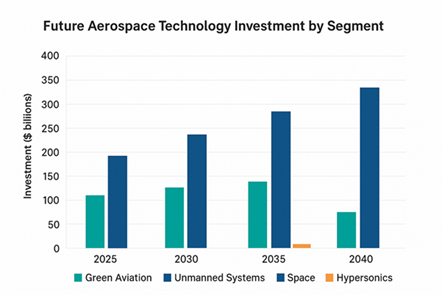
- Urban Air Mobility & eVTOLs
- Zero-emission aircraft propulsion
- Advanced system simulation and autonomous navigation
8.2 Talent & R&D Investments:
- Internal academies for DO-178C, MBSE, and aerospace AI
- Partnerships with universities and startups
- ALTEN Innovation Lab initiatives in electrification and digital design
9. Conclusion
The aerospace sector’s transformation demands a new approach to engineering: one that is agile, digitally enabled, and sustainability-conscious. Organizations that adopt these principles—supported by globally integrated partners—are better positioned to lead in the next era of flight.
ALTEN India, through its commitment to quality, innovation, and scalable talent, plays a pivotal role in enabling this transformation for leading aerospace programs worldwide.
Explore how agile, future-ready engineering can accelerate your aerospace innovation journey. Connect with ALTEN India to co-create the future of flight.
10. About ALTEN India
ALTEN India is the offshore engineering delivery center of ALTEN Group, a global technology and engineering leader with presence in over 30 countries.
Fast Facts:
- 1,000+ aerospace engineers
- Centers of Excellence: Bangalore, Pune
- Core Competencies: Structures, avionics, interiors, digital engineering, V&V
- Key Clients (indicative): Airbus, Safran, Honeywell, Collins Aerospace
- Certifications: AS9100D, ISO 9001:2015
- Awards: Recognized for quality delivery, innovation, and agility
References:
- IATA (2023), “Net Zero Carbon Emissions by 2050”
- McKinsey (2024), “The Future of Aerospace Engineering”
- PwC (2023), “Digital Transformation in Aerospace & Defense”
- Airbus Global Market Forecast (2024)
- NASA Report (2023), “Digital Twins in Propulsion”
- INCOSE (2024), “Model-Based Systems Engineering Trends”
- Boeing Sustainability Report (2023)
- Capgemini Research (2023), “Agile in Aerospace”
- SAE/AIAA (2024), “Agile Engineering Practices in Avionics”
- NASSCOM (2024), “Engineering R&D Outlook”
- International Energy Agency (2023), Aviation Emissions Review
About the Author
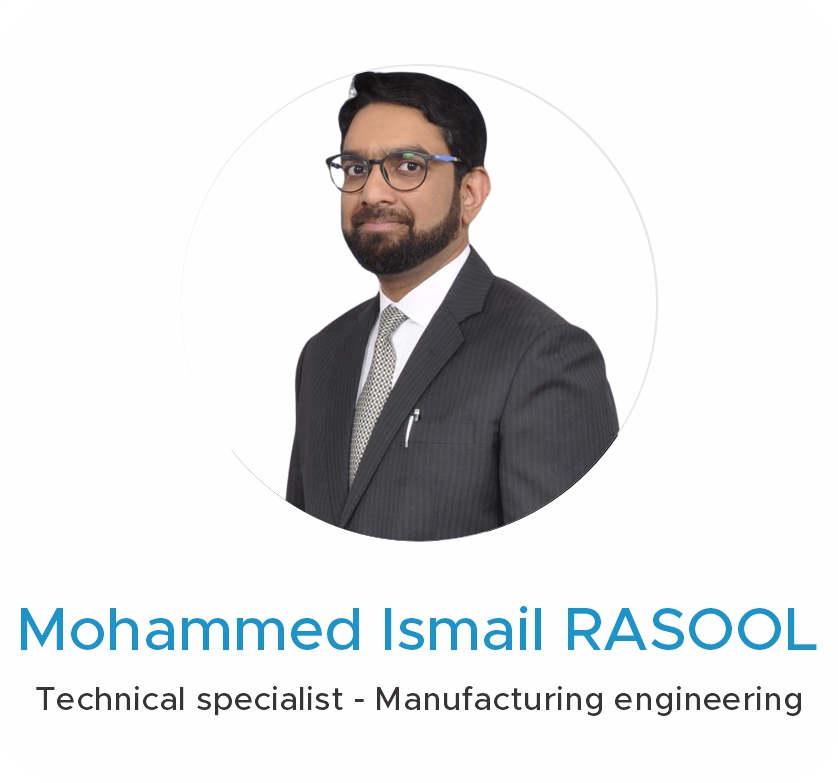
Mohammed Ismail brings over two decades of expertise in Manufacturing Engineering and Quality Functions. He brings a strong track record of leading cross-functional and supplier-integrated projects to deliver robust product launches, regulatory compliance, and building sustainable manufacturing capability across Automotive and Aerospace sectors. Ismail is recognized for implementing disciplined quality frameworks, strengthening supplier readiness, digital manufacturing and continuous improvements. His leadership blends deep technical expertise with operational rigor, enabling organizations to minimise launch risk, improve process capability, and achieve predictable, customer-aligned outcomes in demanding aerospace environments.