From Unit Testing to Engineering
Excellence: A Career-Building
Perspective
18th Feb 2026 | by Pavan Bhide | Read – 3 mins
From Unit Testing to Engineering Excellence: A Career-Building Perspective
Most developers dream of building features from day one. But some of the strongest engineering careers are built much earlier often, in places we don’t expect.
With nearly two decades in automotive and embedded software engineering, I’ve seen firsthand how early career experiences shape long-term capability. Looking back, I can confidently say that starting my journey in unit testing was the most important foundation I could have built.
If you’re a junior engineer wondering where to start, what really matters in your first role, or how to build strong fundamentals, this perspective is for you.
My Unexpected Starting Point
When I began my career in the automotive industry in 2006, my first role wasn’t
“Developer.”
It was “Unit Tester.”
At the time, it felt like I had been given the “easy” work while the real engineering happened elsewhere. I wanted to write features. I wanted to build functionality. I wanted to feel like a real engineer.
I couldn’t have been more wrong.
That year spent deep in unit testing became the most valuable phase of my career. It quietly shaped how I think about software, systems, and quality to this day.
From Simple Tasks to Specialized Knowledge
At first, the job seemed repetitive:
Read requirements. Write test cases. Check code coverage.
But I quickly realized that no two modules were the same.
In automotive systems, some modules run in tight real-time cycles. Others wait for specific conditions. Some are isolated. Others interact with dozens of external interfaces.
Testing forced me to understand why modules behaved the way they did not just what they did. I wasn’t checking boxes anymore. I was learning how architectures behave under real-world pressure.
Lessons I Learned (The Hard Way)
You Learn to See Bugs Before They Exist
Chasing high code coverage means thinking through every edge case: overflows, underflows, invalid states, and logic gaps.
Today, when I write code, I naturally see these risks before I even finish the line.
A Safe Space to Fail and Learn
As a junior engineer, the fear of breaking the system is real.
Testing gave me a playground to explore control flow, experiment with logic, and make mistakes without injecting defects into production code.
Exposure to Multiple Coding Styles
By testing many modules, I saw different design patterns, optimization techniques, and coding habits some excellent, some problematic.
It felt like learning from multiple senior engineers at once.
Understanding the Weight of “Done”
Unit testing is often the final gate before release.
If my report wasn’t ready, the module didn’t ship. That pressure taught me discipline, ownership, and respect for the Definition of Done early in my career.
Why This Matters Even More Today
Modern engineering especially in automotive, embedded, and safety-critical systems is becoming increasingly complex.
Software-defined vehicles, connected platforms, and real-time systems demand engineers who understand:
- System behavior, not just syntax
- Failure modes, not just success paths
- Architecture, not just features
Testing builds exactly this mindset.
Practical Advice for Junior Engineers
If you start in testing:
- Learn the system, not just the test tool
- Read production code regularly
- Ask why failures happen, not just how to log them
- Build strong fundamentals before chasing speed
You’ll move faster later because your foundation is solid.
The Takeaway
If you’re starting your career and land in testing, don’t see it as a detour.
See it as your blueprint the phase where great engineers are quietly built.
Features will come. Titles will come.
But the quality of your thinking is shaped at the beginning.
If you began your career in testing or a “non-glamorous” role, what did it teach you?
About the Author
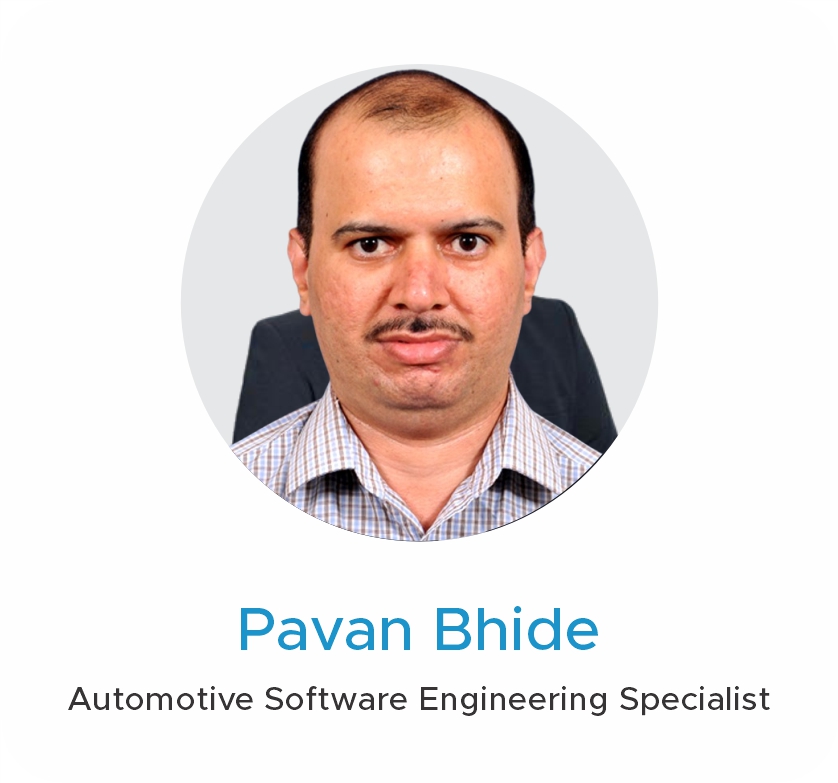
Pavan Bhide is an Automotive Software Engineering Specialist with 20+ years of experience delivering safety-critical ECU solutions across steering, airbag, and ADAS domains. Currently serving as a Technical Specialist at ALTEN India, he leads BSW and application module testing, mentors engineering teams, and drives technical excellence across programs. He brings strong expertise in software integration, testing, and Agile delivery, with a deep passion for building reliable, high-performance automotive systems.